
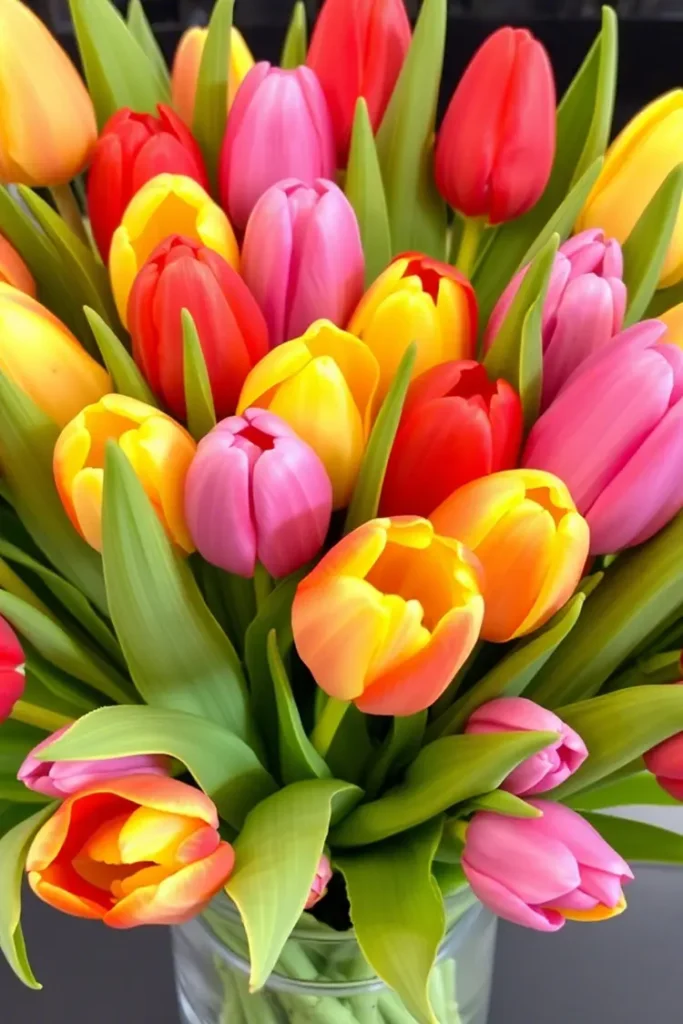
Why Your Tulips Droop (and What to Do About It)
A tulip that flops over the edge of the vase looks like a failure. Most of the time it is not. Tulips are one of the few cut flowers that keep growing after they are cut — the stems continue to lengthen, the heads get heavier, and the whole thing tips. Knowing that changes what you do about it.
Why tulips droop
Three things are usually happening at once. The stem is still elongating, so a stem that stood upright on Monday is two centimetres taller and top-heavy by Thursday. The flower is bending towards the light, because a cut tulip still responds to it. And the stem is soft, because tulips drink a lot and a warm room makes them drink faster than a small amount of water can supply.
Add a radiator, a sunny windowsill or a vase that was filled once and never topped up, and you have the classic tulip collapse: heads on the table by day three, stems still firm.
The newspaper fix
This is what florists do, and it works on tulips that look past saving.
- Fill a clean vase or a tall jug with about five centimetres of cold water.
- Re-cut the stems by two centimetres at an angle.
- Wrap the whole bunch tightly in newspaper or brown paper, so the stems are held straight and the heads are supported.
- Stand the wrapped bunch in the water and put it somewhere cool and dark — a hallway, a garage, the bottom of a fridge if there is room.
- Leave it for two to four hours, or overnight. Unwrap and the stems will be straight.
The paper is doing the work a florist’s bucket does: holding the stems upright while they take up water, so they stiffen in the right position rather than setting in a curve.
What to do before they droop
Cut tulips with a sharp knife rather than scissors, on the angle, and strip any leaf that would sit below the waterline. Use a clean vase — tulips are prone to stem rot in dirty water — and change the water every day rather than every third day, because they drink faster than most flowers.
Keep them cool. A tulip in a cold hallway will outlast the same tulip on a kitchen windowsill above a radiator by several days. And keep them away from the fruit bowl: ripening fruit gives off ethylene, which pushes flowers towards the end faster.
Do not mix them with daffodils
Daffodil stems release a sap that blocks the water uptake of other flowers, tulips included. If you want both in one vase, condition the daffodils separately first: cut them, stand them in their own water for twelve hours, then rinse the stems before adding them to the tulips. Never put freshly cut daffodils straight in with anything else.
When it is genuinely over
If the heads are soft rather than just bent, if the petals have gone translucent at the edges, or if the stems feel slimy, no amount of newspaper will bring them back. That is the end of the vase life, not a care problem. Tulips bought in bud and conditioned properly should give you five to seven days; the ones sold fully open at a supermarket will give you three.
What we send
Our tulips are bought in tight bud and conditioned cold, which is why they arrive standing up and stay that way. You can see the current pink tulip bunch and the yellow tulip bunch, or call us if you want a colour we do not have listed. We deliver across NW6 and the surrounding streets — see the delivery page for the details.
Related reading: how to make roses last longer and what to order for Christmas. More notes from the shop are in the journal.
Filed under Care.